
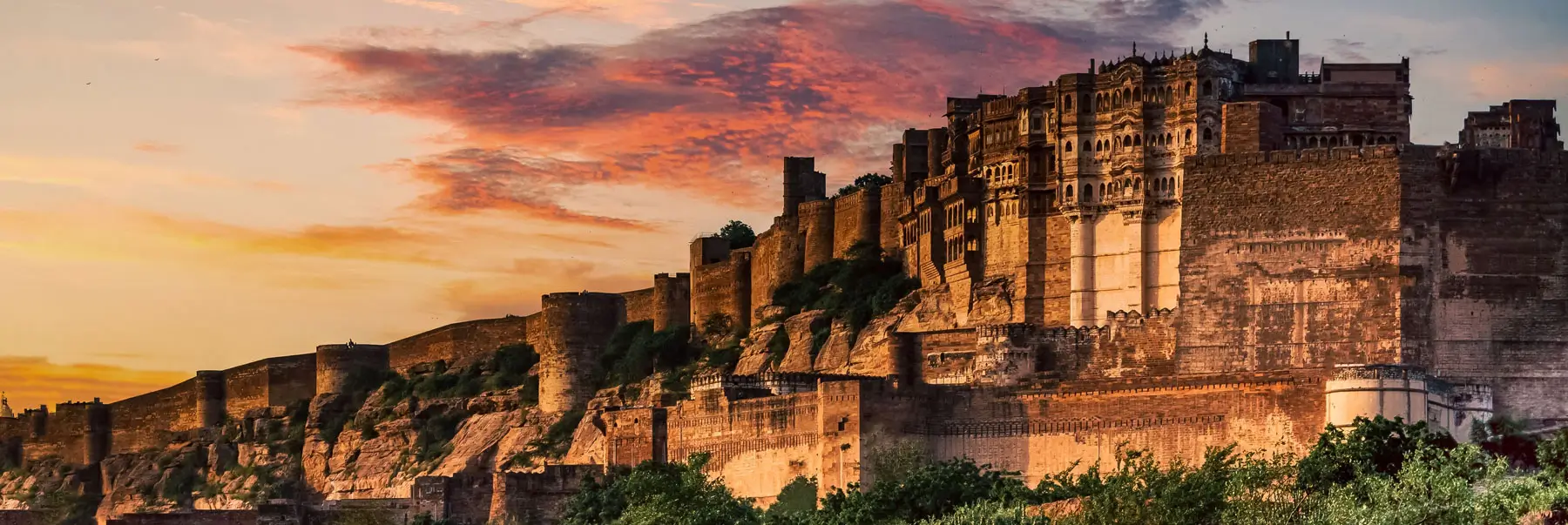
Golden Triangle Tour India: Complete Guide to Delhi, Agra & Jaipur
The Golden Triangle Tour India is one of the country's most practical multi-city routes for travellers who want history, architecture, food, markets and contrasting city cultures within a relatively compact journey. Delhi, Agra and Jaipur form the three points of the circuit, with road connections making it possible to move between them without complicated transport arrangements.
What makes the route valuable is the difference between the three destinations. Delhi carries layers of Sultanate, Mughal, colonial and modern capital history. Agra concentrates some of India's finest Mughal architecture into a relatively small area. Jaipur brings Rajput forts, royal residences, planned old-city streets and Rajasthan's craft traditions into the journey.
For domestic travellers, a Delhi Agra Jaipur tour can work as a short holiday of three or four days, although five or six days provides considerably better sightseeing time. Families with children or senior members generally benefit from the longer schedule because the route involves monument walking as well as intercity driving.
A private road itinerary is particularly convenient. A Golden Triangle tour by car avoids repeated railway transfers, station reporting times and separate local taxis in each city. Luggage remains with the vehicle during intercity sectors, stops can be made for meals or refreshments, and hotel-to-hotel transportation becomes simpler.
The route, however, should not be treated as a race between famous monuments. A good itinerary must account for Delhi traffic, the Taj Mahal's Friday closure, Jaipur's large sightseeing area, monument walking time and realistic highway travel. Getting those details right makes the difference between a comfortable holiday and three cities squeezed into an exhausting schedule.
Delhi: Where the Golden Triangle Journey Takes Shape
Delhi deserves more than being treated merely as the airport at the beginning of a Golden Triangle tour package. The capital contains historical areas from several periods, and its attractions are spread across a large geographical area. Travellers who attempt to cover Old Delhi, South Delhi and the central government district within a few hours often spend too much of their day in traffic.
Old Delhi carries some of the strongest Mughal-era character. Red Fort, Jama Masjid and the lanes around Chandni Chowk represent a very different city from the broad roads of New Delhi. Chandni Chowk is particularly rewarding for travellers interested in traditional markets and street-level activity, but private cars cannot conveniently move through every narrow section. Walking, cycle rickshaws or locally permitted transport may be more practical in congested areas.
Central Delhi changes the visual character completely. India Gate and the government district provide a glimpse of the monumental avenues associated with the capital's later development. South Delhi adds important historical sites such as Qutub Minar and Humayun's Tomb. The latter is especially relevant before visiting Agra because its garden-tomb architecture helps travellers see how Mughal design developed before the Taj Mahal.
Paid monuments have separate entrance charges, and prices can change. Domestic visitors should budget a few hundred rupees per person across multiple paid attractions in Delhi rather than assuming sightseeing is free. Parking, local transport in restricted areas and authorised guides can add further costs. Travellers should verify current official ticket prices before arrival rather than relying on an old screenshot or travel post.
Opening hours also influence the route. Many heritage attractions operate primarily between morning and late afternoon or early evening, while weekly closures can apply to particular sites. An itinerary that places a major attraction at the opposite end of the city shortly before closing time is rarely useful.
For a comfortable Delhi sightseeing tour, one full day is a sensible minimum. Travellers arriving before noon can cover selected attractions on arrival day, but attempting a complete Delhi programme after an afternoon flight is unrealistic.
Delhi is also the easiest point for selecting the vehicle used for the complete circuit. A couple can generally travel comfortably in a sedan, while families carrying several suitcases may find an SUV or larger vehicle more practical. The cheapest vehicle is not always the best choice for a multi-day road journey; luggage space and rear-seat comfort matter considerably after several hours on the highway.
Agra: Taj Mahal, Mughal Architecture and the Right Sightseeing Schedule
Agra is geographically smaller than Delhi, but its importance within the India Golden Triangle tour is enormous. For many travellers, the Taj Mahal is the principal reason for including the city, yet treating Agra as nothing more than a quick Taj Mahal photography stop misses a substantial part of its historical character.
The Taj Mahal should receive enough time for entry procedures, walking, photography and viewing the main complex. Security restrictions apply, and visitors should avoid carrying unnecessary items. Ticket categories and additional access charges can change, so current rates should be checked through official channels close to the travel date.
One rule matters enormously when arranging the itinerary: the Taj Mahal is generally closed to regular visitors on Fridays. A package that reaches Agra on Thursday night and schedules the Taj Mahal for Friday morning immediately creates a problem. Travel dates should therefore be checked before hotels and transport are finalised.
Morning visits are popular because temperatures can be more comfortable during warmer months and the light can be attractive for photography. Crowd levels, however, vary with holidays, weekends and seasonal demand. Reaching early does not mean visitors will have the monument to themselves.
Agra Fort deserves its own proper visit. Its fortified walls, courtyards, halls and former royal sections provide a broader picture of Mughal imperial life. Travellers who see both Agra Fort and the Taj Mahal gain much more historical context than visitors who only stop at the latter.
Mehtab Bagh, located across the Yamuna, can be useful for travellers staying overnight. Its position provides another perspective towards the Taj Mahal, particularly when atmospheric conditions are favourable. It should be treated as an additional sightseeing option rather than a replacement for entering the main Taj complex.
Delhi to Agra by road commonly requires around three to four hours under normal conditions, although actual travel time depends on the Delhi pickup point, traffic, stops and road conditions. That is one reason a private vehicle works well for a Delhi to Agra private car tour. Travellers can leave directly from their hotel instead of first transferring to a railway station.
A same-day Delhi–Agra return is possible, but it creates a long day. For a multi-city Golden Triangle circuit, spending one night in Agra usually creates a better rhythm. Travellers can see the city properly and leave for Jaipur the following day without combining two highway sectors and major sightseeing into the same waking period.
Food and accommodation are available across budget categories. Domestic travellers looking for comfortable mid-range hotels should budget on the higher side during weekends, holidays and peak wedding or tourism periods. Hotel rates can change sharply according to location and season, so a fixed year-round figure is rarely reliable.
Jaipur: Forts, Royal Heritage and the Pink City
Jaipur gives the Delhi Agra Jaipur itinerary its Rajasthan identity. The city is larger and more spread out than first-time visitors sometimes expect, which is why one short afternoon rarely does justice to its main heritage areas.
Amer Fort is generally one of the most time-consuming major visits because it sits outside the central Pink City and requires walking through a large complex. Travellers should allow enough time for the approach, entry, courtyards, palace sections and viewpoints. Comfortable footwear matters, particularly for senior travellers and families with young children.
On the return towards central Jaipur, Jal Mahal is commonly used as a photography stop. The palace sits within Man Sagar Lake and is primarily viewed from the roadside/lakeside area rather than treated like a conventional palace visit.
Central Jaipur contains several major landmarks within a relatively concentrated heritage district. City Palace, Jantar Mantar and Hawa Mahal can therefore be arranged efficiently when sightseeing is sequenced correctly. City Palace introduces Jaipur's royal history, while Jantar Mantar provides a completely different perspective through monumental astronomical instruments.
Hawa Mahal is one of Jaipur's most recognisable façades. Travellers interested only in photography may require relatively little time outside, while those wanting a fuller visit should account for entry procedures and walking.
The Pink City markets deserve time beyond monument visits. Jaipur is known for jewellery, block-printed textiles, garments, handicrafts and traditional products. Prices vary enormously according to material and quality, so travellers purchasing expensive jewellery or gemstones should use established sellers and obtain proper bills rather than relying solely on verbal claims.
For most travellers, Jaipur needs at least one full sightseeing day. Two nights are even better because the arrival evening can be used for the old city or leisure, leaving the following day for the main heritage circuit.
Hotel pricing ranges widely. Budget accommodation may appear inexpensive online, but location, parking, room size and cleanliness should be considered alongside price. Families seeking dependable mid-range accommodation can often expect to spend roughly ₹3,000–₹6,000 or more per room per night, while premium and heritage properties can rise substantially above that range. Peak dates can be considerably more expensive.
A Jaipur private car tour also makes practical sense because Amer and the central heritage district are not in exactly the same area. A dedicated vehicle avoids repeatedly negotiating with local taxis between stops and can return guests directly to their hotel after the sightseeing programme.
How Many Days and How Much Money Should You Keep for the Golden Triangle?
Duration has a greater effect on the quality of a Golden Triangle holiday package than many travellers realise. The three cities can technically be connected very quickly, but reaching a destination is not the same as having enough time to see it properly.
A 2 nights 3 days Golden Triangle tour is the compact version. It can work for travellers with extremely limited time, but early starts and tightly controlled sightseeing are unavoidable. Delhi may receive only selected sightseeing, Agra must be timed carefully and Jaipur will have a busy final day.
A 3 nights 4 days Golden Triangle tour is more workable. Dedicated time can be given to Delhi, followed by Agra and Jaipur without placing every major road journey on the same day as a complete city tour.
Four nights and five days is a strong choice for families and couples. It allows the itinerary to breathe, gives more flexibility around hotel check-in and check-out, and reduces the temptation to spend only 20 minutes at attractions that deserve considerably longer.
Travellers who have five or six nights can also add an extension. Ranthambore is suitable for wildlife interests, Pushkar adds a pilgrimage element, while Mandawa introduces Shekhawati's frescoed havelis. Longer itineraries can continue towards Udaipur, Jodhpur or other Rajasthan destinations.
Cost varies with vehicle, hotels, number of passengers and season. For two adults, a private multi-day Golden Triangle tour by car and driver with decent hotels should be budgeted conservatively rather than according to the lowest advertisement found online. Depending on duration and hotel level, a practical starting expectation can run from roughly ₹25,000–₹45,000+ for a short private trip for two, with premium accommodation, larger vehicles, guides and additional nights pushing the total higher.
Monument entrance fees should normally be budgeted separately. Food also varies significantly: simple meals may cost a few hundred rupees per person, while quality hotel or premium restaurant dining can easily reach ₹800–₹1,500+ per person. Travellers should keep additional funds for beverages, shopping, guides and optional activities.
Vehicle selection changes the quote as well. A sedan is usually economical for two or three passengers with manageable luggage. An SUV costs more but offers greater cabin and luggage space. Larger families may require a tempo traveller or similar vehicle, which raises fuel, toll and vehicle charges but can be more practical than squeezing passengers into smaller cars.
When comparing Golden Triangle tour packages from Delhi, travellers should check exactly what the quotation contains. Hotel taxes, breakfast, tolls, parking, driver allowance and interstate charges should be clearly stated. A low headline price can become less attractive if major road expenses are added later.
For a balanced first trip, four to five days is the strongest middle ground. It gives Delhi, Agra and Jaipur enough individual identity while retaining the convenience that makes the Golden Triangle one of India's most useful private road circuits.
India Tour with Car & Driver
It is a long established fact that a reader will be distracted by the readable content of a page when looking at its layout. The point of using Lorem Ipsum is that it has a more-or-less normal distribution of letters, as opposed to using 'Content here,